
Protein Intake for Women Over 40
What Every Nutritionist and Registered Dietitian Wants You To Know
Protein intake for women over 40 is essential for maintaining muscle, boosting metabolism, and supporting midlife health. Learn how much protein you need, when to eat it, and the best sources.
Protein Intake for Women Over 40: Why It Matters More Than Ever
If there is one nutrition habit that consistently makes the biggest difference for our clients, it is protein intake for women over 40. This isn’t about trends or adding a protein shake after a workout. It’s about supporting your body through midlife when metabolism, muscle mass, and hormones are shifting, often without obvious signs. Most women aren’t intentionally under-eating protein. They’re simply eating the way they did in their 20’s and 30’s and struggle with wondering why it no longer works. At this stage, your body needs something different. The good news? This is one of the most effective changes you can make.
Protein Intake for Women Over 40 Supports Metabolism and Muscle
Protein is often reduced to “muscle food,” but that is an incomplete picture. As Registered Dietitians, we spend time helping clients understand that protein plays a critical role in maintaining a healthy body. Protein is responsible for muscle preservation, enzyme production, and immune function. It also supports the structural integrity of skin, hair, and nails. Unlike carbohydrates or fats, the body does not have a specialized storage system for protein. If the daily intake is low, the body breaks down muscle to meet its needs
Now layer in menopause. As estrogen declines, muscle becomes easier to lose and the body becomes less responsive to protein and exercise. This is why protein intake for women over 40 must be intentional and deliberate rather than incidental to support muscle mass.
How Much Protein Intake for Women Over 40 Is Needed?
A realistic and effective target to aim for each day is 25–35 grams of protein per meal. This works best when evenly distributed throughout the day. Consistency in distribution is just as important as the total daily amount.
Your body can only use a portion of protein at one time for muscle repair
Large amounts of protein at one time are less effective for preserving muscle
Long gaps without protein can lead to muscle breakdown
It’s those consistent, small daily shifts in your dietary routines that always outperforms extremes.
Protein Intake for Women Over 40: Why Timing Matters
This is the part that tends to surprise people. Protein is not just about how much you eat. It is about when you eat it. Because protein is not stored, your body needs a steady supply throughout the day. If you go long stretches without protein, your body compensates by breaking down muscle. A common meal intake pattern that we hear is that a typical day begins with a low-protein breakfast (coffee, toast, or oatmeal alone), followed by a moderate level of protein for lunch and finally the largest amount of protein at dinner.
A better structure looks like this:
Breakfast: 25 to 30 grams
Lunch: 25 to 35 grams
Dinner: 25 to 35 grams
Optional snack: 10 to 20 grams if needed
This pattern supports muscle maintenance, satiety, and energy levels. It also stabilizes blood sugar, which becomes increasingly important in midlife.
Best Protein Sources for Women Over 40
When we talk about protein intake for women over 40, quality matters just as much as quantity. A combination of animal and plant-based proteins provides a mix of essential amino acids, vitamins, and minerals.
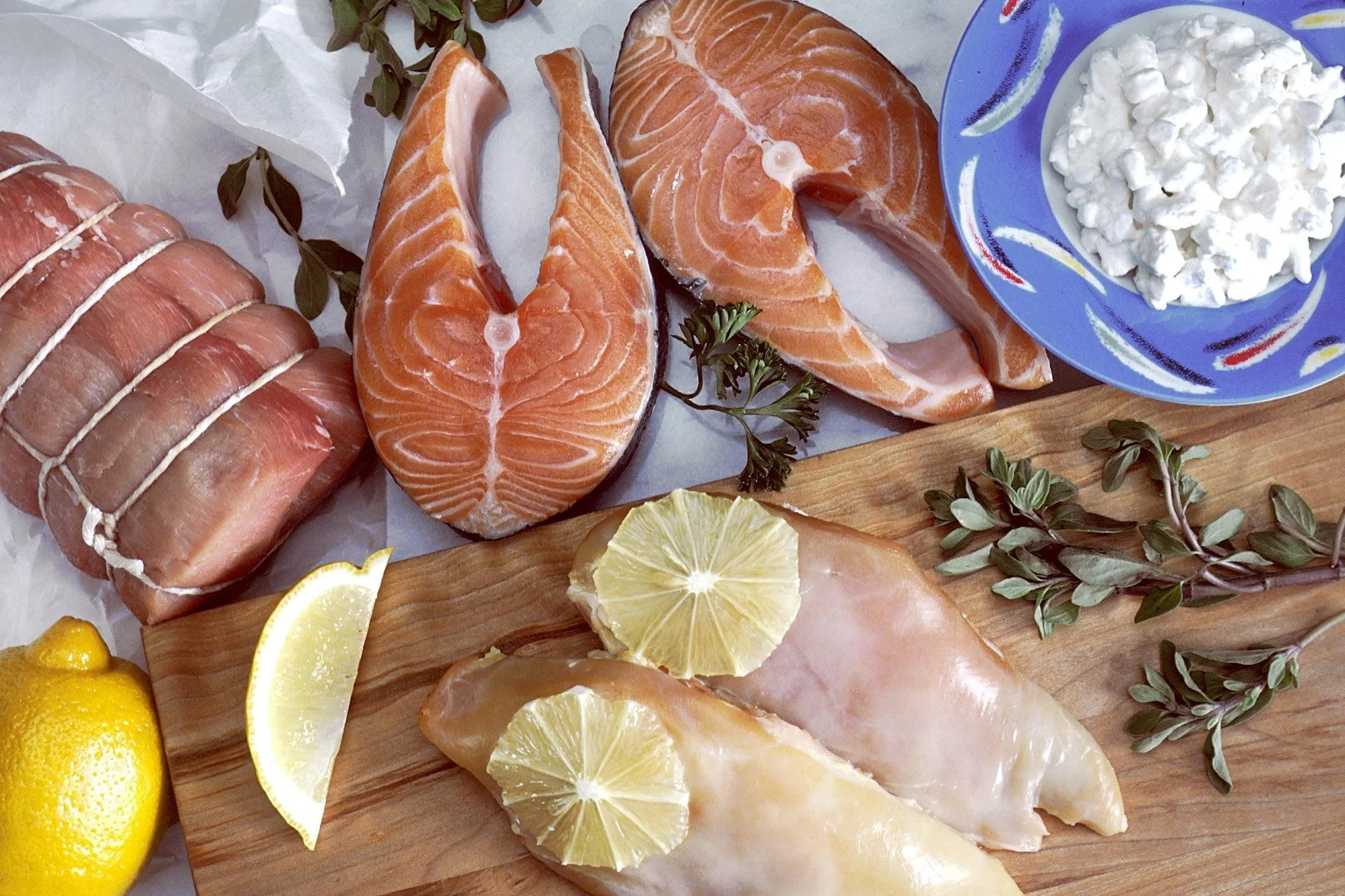
Animal-Based Options: Poultry, fish, seafood, lean beef, eggs, Greek yogurt, and cottage cheese are highly are efficient ways to meet protein needs in a busy lifestyle
Plant-Based Options: Lentils, beans, chickpeas, tofu, edamame, nuts, chia seeds, ground flax seed and quinoa provide essential fiber and gut health benefits particularly valuable in midlife.
Protein Intake for Women Over 40: What to Limit
This is where we tend to be direct. Not all protein sources are helpful, even if they technically contain protein. Limit or avoid processed meats like bacon, sausage, and deli meats, as well as fried proteins or highly marbled cuts of meat. These foods often come with added saturated fat, sodium, and additives that do not support long term health or gut function. If you are building your protein intake around these foods, you are working against yourself.
Common Mistakes with Protein Intake for Women Over 40
If you recognize yourself in any of these, you are not alone. We hear this from women all the time. These patterns are incredibly common and very fixable
Skipping protein at breakfast (coffee and toast is not a protein strategy)
Eating most protein at dinner (this does not support muscle maintenance during the day)
Relying on protein shakes alone (convenient, yes. sufficient, no.)
Not eating enough overall (when total intake is too low, protein will be used for energy instead of maintenance and repair)
Not adjusting nutrition with age (your needs at 45 are not the same as they were at 30)
Practical Strategies to Improve Protein Intake
Improving protein intake does not require an immediate dietary overhaul. A successful transition begins with small, intentional shifts in your daily routine.
Combine Sources: Improve nutrient density by pairing proteins, such as adding chickpeas to grilled chicken or nuts to Greek yogurt.
Prioritize the Morning: Start with breakfast by adding eggs or egg whites, protein-added oatmeal, or Greek yogurt to improve energy and appetite control.
Audit Your Habits: Ask yourself if you are including protein at each meal and if you are spacing those servings evenly throughout the day.
Final Thoughts on Protein Intake for Women Over 40
This is not about perfection. Refining protein intake is one of the most powerful tools for maintaining strength and enhancing body composition after age 40. If you’re not seeing results despite your efforts, this is often the missing piece.
Focus on:
Consistency
Distribution
Quality
That’s where real, sustainable change happens.
